


This article has been translated from English to Gen Z Slang.
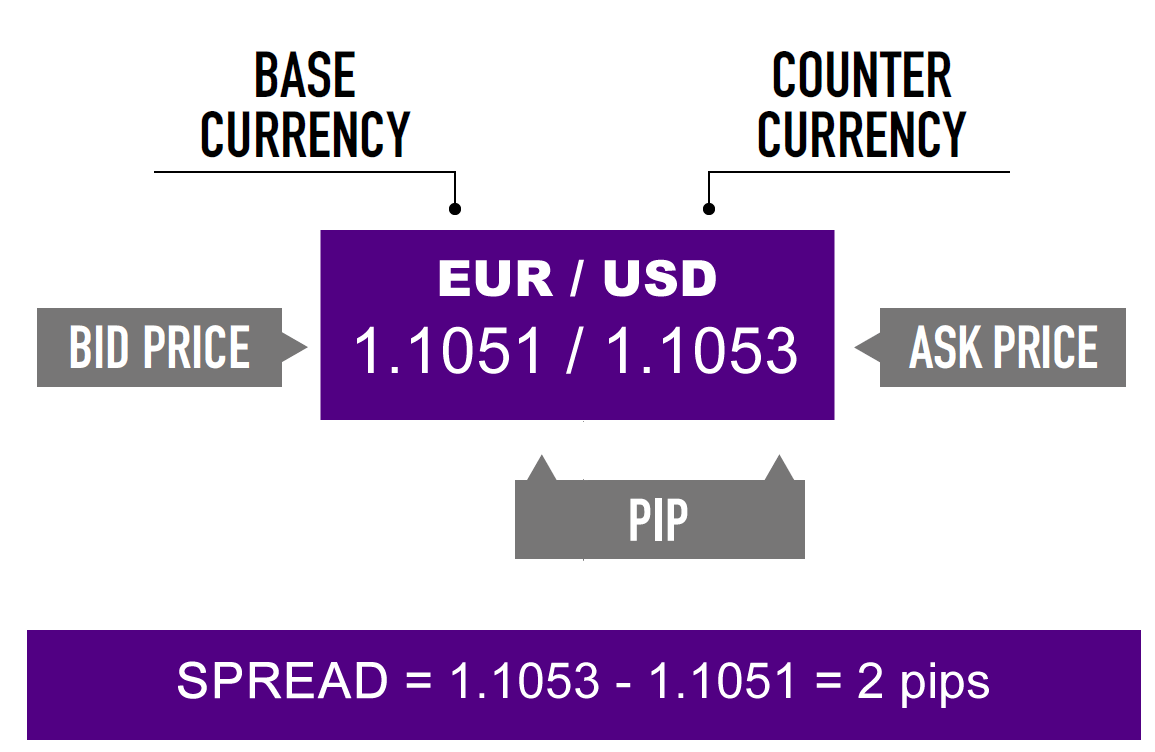
Forex bros will hit you up with two different prices for a currency pair: the bid and ask price.
The “bid” is like the price where you can YEET the base currency outta there. 💨
The “ask” is what you gotta deal with when you wanna scoop up that base currency. 🎤
The diff between these two prices? That's the spread.
Also flexed as the “bid/ask spread“.
The spread is how those “no commission” squads make their coin. ✨💸
Instead of hitting you with a fee just for trading, they sneak it into the buy and sell price of the currency pair you got your eye on, fam. 👀
From a business POV, it’s all vibes. Gotta make bank somehow, right?
- They stack cash by selling you the currency for more than they snagged it.
- Plus, they rake it in by snagging the currency from you for less than what they’ll cash it in for.
- That juicy difference? Yeap, the spread.
Pretty much the same energy as when you're trying to offload your old iPhone at a store. (A phone rocking only two rear cams? Nah, pass. 📱😜)

To make some dough, the shop's gotta buy your iPhone for a price lower than they plan to flip it.
If they're selling an iPhone for $500, they’re only gonna pay you max $499 to make that paper. 💵
That tiny $1 gap is the spread. 🤑
So when a broker's hollering “zero commissions” or “no commission”, it’s a cap ’cause even if there ain't no separate fee, you're still coughing it up. 😂
It's just wrapped into the bid/ask spread!
How is the Spread in Forex Trading Measured?
The deets? It's usually measured in pips, the tiniest move a currency pair can do.
Most pairs, one pip means 0.0001.
A 2 pip spread for EUR/USD might look like 1.1051/1.1053. 🤏
When it comes to yen pairs, they're only quoted with 2 decimals (unless there's fractional pips, then you might catch 3). 😹
Like JPY might show as 110.00/110.04. Which means a spread of 4 pips, fam. 😎
What Types of Spreads are in Forex?
Straight-up, it depends on your forex dealer and their paper hustle.
We've got two flavor spreads:
- Fixed 🔒
- Variable (also known as “floating”) 🌊

Fixed spreads are dished out by brokers playing as market creators or the “dealing desk” while the variable spreads vibe is all about those “non-dealing desk” setups.
What are Fixed Spreads in Forex?
Fixed spreads stay solid no matter what craziness the market’s up to. Whether it's Kanye's mood swings 🌪️ or ninja quiet, the spread ain't trippin'.
Fixed spreads are repped by market makers living that “dealing desk” life.Here’s the tea: brokers snag big positions from liquid peeps and then flip them in smaller bites to traders.
This puts the broker in place as the counterparty for y'all trades.
Running a dealing desk means forex handlers can serve fixed spreads ’cause they got this price control game strong. 🕹️
What are the Advantages of Trading With Fixed Spreads?
Fixed spreads got lower cash barriers, so it’s a win for the broke squad looking to trade on a budget. 💸
Having fixed spreads means you know what's up with transaction costs. No surprises—like ever. You kiss the mystery goodbye whenever you trade! 😏
What are the Disadvantages of Trading With Fixed Spreads?
Requotes drop like it’s hot with fixed spreads 'cause it's all sourced from a single place (that’s your broker, duh).
And when we say drop frequently, we're talking Kardashian-level Insta posts! 🤳
During crazy forex times, with prices zipping around, fixed spreads mean brokers can’t expand spread to catch up with the chaos.So when you bid on a certain price, the broker might hit pause and ask you to vibe with a fresh price. You’ll get “re-quoted”.
A heads-up will pop that your price might’ve gone for a stroll—your call if you're down for the new scene. Spoiler alert: it's hardly ever the deal you aimed for. 😬
Slippage hits different. If it’s a speedy market, brokers struggle to hold down a fixed spread, meaning your final trade price might get ghosted from your initial target. 🥴
Slippage? Think of it like a Tinder swipe gone wrong, when the person you meet ain't hardly the thumbnail you clicked on. 😆
What are Variable Spreads in Forex?
Variable spreads be switchin’ all the time! ⏳ When it comes to variable spreads, it's all about those bid and ask prices flippin’ like no one's biz.
Non-dealing desk brokers serve up variable spreads. They dish out prices from a posse of liquid players—straight, no filter.They can’t control spread moves. Spreads tighten or widen based on supply and market craziness.
Typically, spreads become thicc as heck during data drops or anytime the market feels sus—like holidays or when the zombies roll through. 🧟♀️
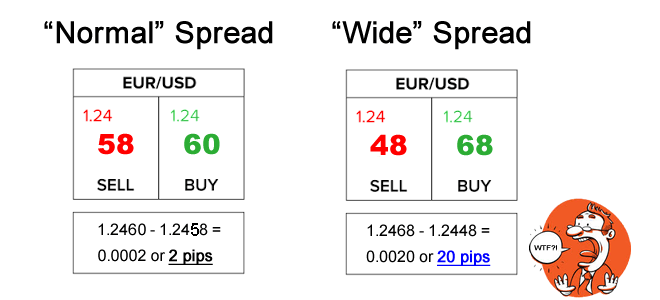
Imagine you’re buying EURUSD at a 2-pip spread, then boom—the U.S. drops some job stats, and the spread BIGCHUNGUS jumps to 20 pips! 😳
And yeah, spreads might stretch when a certain someone tweets wild stuff about the U.S. dollar when they were still the head honcho. 😜

What are the Advantages of Trading With Variable Spreads?
Variable spreads mean no requotes. 🙌 The wiggle room in spread considers all the drama in market price changes.
(But, no cap, no requotes doesn’t exclude you from slippage ghosting.)
Forex trading with variable spreads gives you a clearer price scene, especially when you know these multiple source prices mean competition, AKA, better deals. 😎
What are the Disadvantages of Trading With Variable Spreads?
Variable spreads and scalpers? Nah, bruh—too unpredictable. Spread chubbiness can munch your gains. 😬
Same story with news traders. A juicy spread could flip, eating your deal in a blink—just like that. 👀
Fixed vs Variable Spreads: Which is Better?
Whether fixed or variable spreads are your BFF depends on your go-tos as a trader, fam.
Some traders may find fixed spreads cuffing season easy compared to variable spread playas. Works both ways tho.
Generally, small-stakes traders not blowing up the game favor fixed spread vibes.
While big-time players track variable spreads during market crush hours (the tightest spreads) for the upper edge. 📈
Traders vibing with speed and zero patience for requotes? Variable spreads, no doubt. ⚡️
Spread Costs and Calculations
Now that you know the tea on spreads and different types, there’s one last thing:
How the spread clicks with your transaction hustles.
Peep, it’s simple to break down—just gotta roll with these:
- The value per pip 🤑
- The number of lots you’re trading 📊
Let’s check out an example… 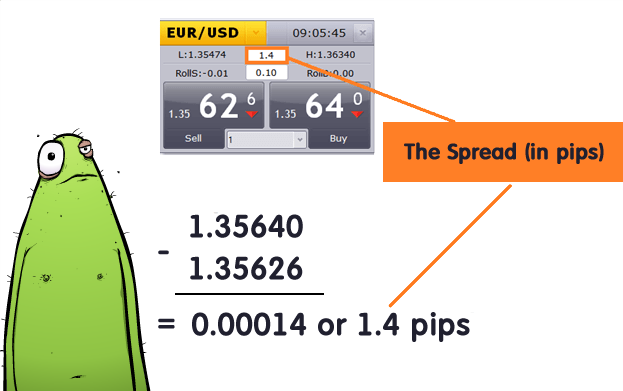
In this quote, cop EURUSD at 1.35640, flip it at 1.35626.
Which translates interest if you bought and flipped instantly, you'd dip 1.4 pips. 😅
Calculate total coin by multiplying the pip cost by your trade lots.
Trading mini lots (10,000 units), means pip metrics buck at $1, so opening effects a strong $1.40. 💰

Pip cost is linear. So, like, multiply pip cost by trade lots.
Up your trade size, and with it, transaction costs, reflecting in spread, goes skyward.
Example, 1.4 pip spread with 5 mini lots, you’re looking at $7.00. 💲💲
