


This article has been translated from English to Gen Z Slang.
Yo, the classic way of figuring out pivot points ain't the only vibe to do it.
Like, tuning into BTS ain't the only way to vibe with K-pop. (Blinks! Annyeonghaseyo!)
Traders have been out here leveling up the OG pivot point, and now we got new ways to calculate these bad boys.
This lesson's gonna spill the tea on these new methods and hit you with the formulas to get those levels.
Woodie Pivot Point
R2 = PP + High – Low
R1 = (2 X PP) – Low
PP = (H + L + 2C) / 4
S1 = (2 X PP) – High
S2 = PP – High + Low
C – Closing Price, H – High, L – Low
Peep how the Woodie pivot point is way diff from the basic style.
To get the support and resistance levels, snag the diff between yesterday’s high and low, AKA the range.Here's a chart showing the Woodie pivot point on EURUSD.
Woodie’s pivot point and levels are solid lines, while dotted ones are from the classic method.
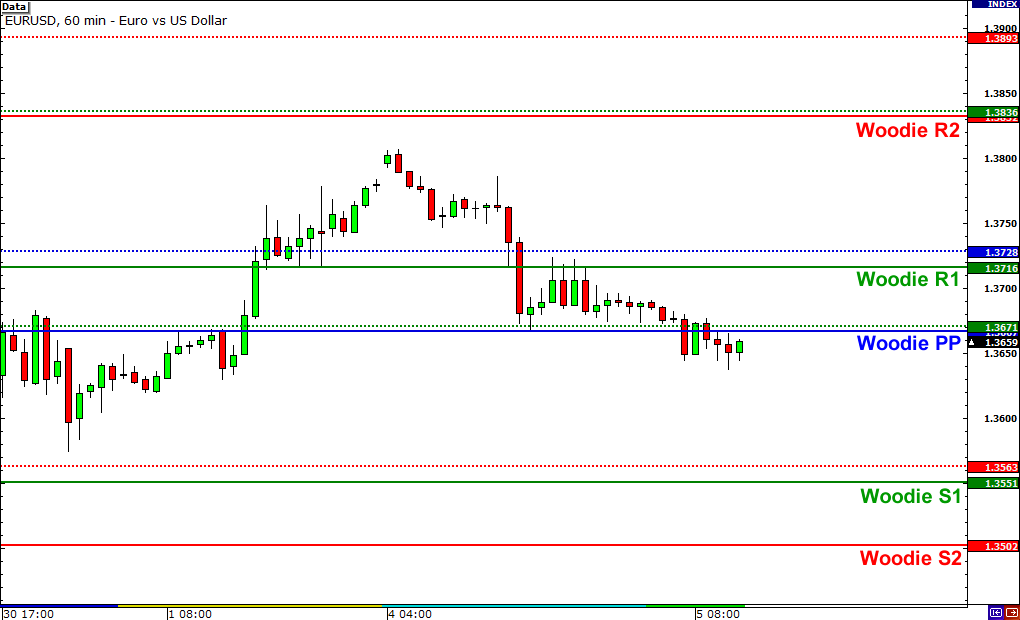
Since the formulas are diff, Woodie's results pop off differently than the standard.
Some folks love Woodie’s style cuz it puts more juice on the closing price from last time.Others stick with the standard cuz it's like the crowd favorite, making it a self-fulfilling prophecy.
No matter the vibe, since resistance can flip to support (and vice-versa), using Woodie’s means you gotta keep an eye out, cuz those spots might pop. Whatever floats your boat!
Camarilla Pivot Point
R4 = C + ((H-L) x 1.5000)
R3 = C + ((H-L) x 1.2500)
R2 = C + ((H-L) x 1.1666)
R1 = C + ((H-L) x 1.0833)
PP = (H + L + C) / 3
S1 = C – ((H-L) x 1.0833)
S2 = C – ((H-L) x 1.1666)
S3 = C – ((H-L) x 1.2500)
S4 = C – ((H-L) x 1.5000)
C – Closing Price, H – High, L – Low
The Camarilla and Woodie formulas are like BFFs. They both use last day’s close and range.
The twist is you gotta snap up 8 main levels (4 resist, 4 support), each multiplied by a multiplier.The main Camarilla vibe is about price bouncing back to the mean (sound familiar?), or the previous close.
When price hits the third support or resistance, it’s go time to buy or sell.
But if it smashes through S4 or R4, ya know the trend's got serious clout, hop on the wave!
Check how Camarilla’s levels (solid lines) flip the script compared to the standard (dotted lines)!

As shown above, there’s more hype on the closing price than the pivot point.
Because of this, resistance might be below the pivot, or support above. Wild, right?
All levels above Camarilla pivot point—crazy stuff!
Fibonacci Pivot Point
R3 = PP + ((High – Low) x 1.000)
R2 = PP + ((High – Low) x .618)
R1 = PP + ((High – Low) x .382)
PP = (H + L + C) / 3
S1 = PP – ((High – Low) x .382)
S2 = PP – ((High – Low) x .618)
S3 = PP – ((High – Low) x 1.000)
C – Closing Price, H – High, L – Low
Fibonacci pivot levels start by calculating the pivot like the standard way.
Then, multiply yesterday’s range with a Fibonacci level. Most peeps use 38.2%, 61.8%, and 100% retracements.Add or subtract those numbers from the pivot point, and boom, you got your Fibonacci levels!
Peep the chart to see how the Fibonacci method (solid lines) is a whole other vibe than the standard method (dotted lines).
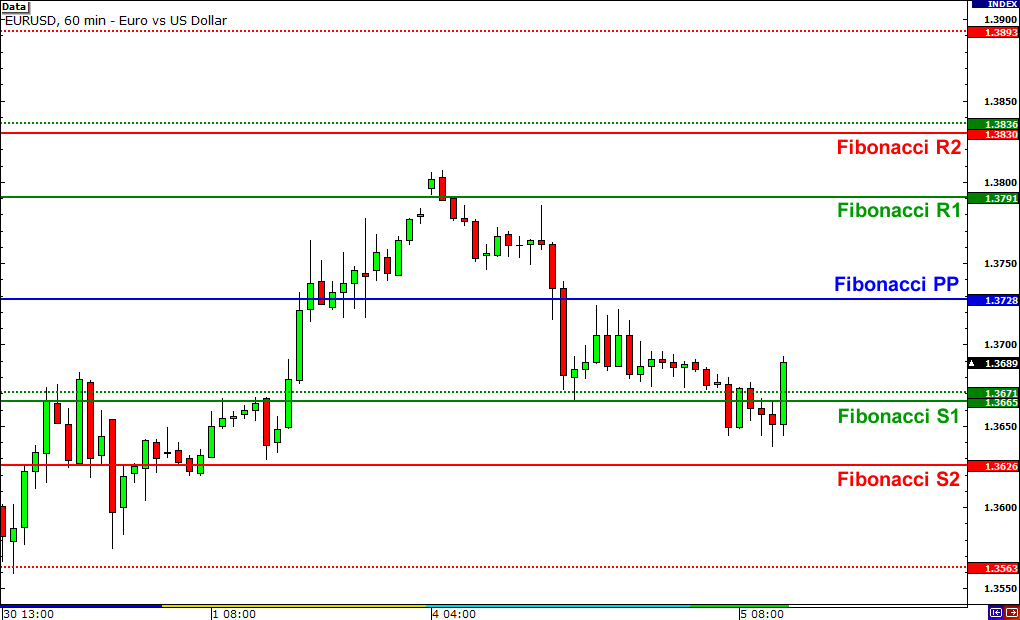
The 411 is, many traders dig Fibonacci ratios for retracement, moving averages, etc.
Why not flex it for pivot points too?
Remember, both Fibonacci and pivot levels help spot support and resistance.
So many traders on these, they might just become self-fulfilling.
Which pivot point method is best?
No cap, just like all the indicator mashups you've learned so far, there ain’t a single best method.
It's all about how you mix pivot points with the rest of your trading gear.
Most auto-charting software stick to the standard method for pivot points.
But now that you can cook up these levels yourself, give 'em all a whirl and see which vibe fits you best. Pivot your way!