


This article has been translated from English to Gen Z Slang.
Okay, fam, we’re diving deep into how to slay the game by designing your own forex trading system. 🤑✨
For real tho, even though whipping up a system doesn’t take forever, testing it out is like the real tea and needs some dedication. 💪
So be chill; over time, a lit forex trading system can potentially score you major coins.
Step 1: Time Frame
First up, you gotta figure out what kind of forex trader vibe you’re on.
Are you living that day trader life or being a chill swing trader? ✨
You into checking charts daily, weekly, monthly, or do you like YOLOing yearly? Also, how long do you wanna hold your bag?This will help you vibe with which time frame to squad with when trading. Even if you hop on multiple time frames, this is bae when looking for trade signals. 👀
Step 2: Find indicators that help identify a new trend.
Eyy, gotta spot trends quick like a TikTok trend blowing up. So let’s slide into those indicators that are gonna keep us lit. 💥
Moving averages are your trader vibe check—major key alert for spotting trends. 🚀
Usually, you’re pairing up two averages (one slow, one fast) and waiting for that crossover moment like it’s fate. ✨
This is the deets on the “moving average crossover” system.
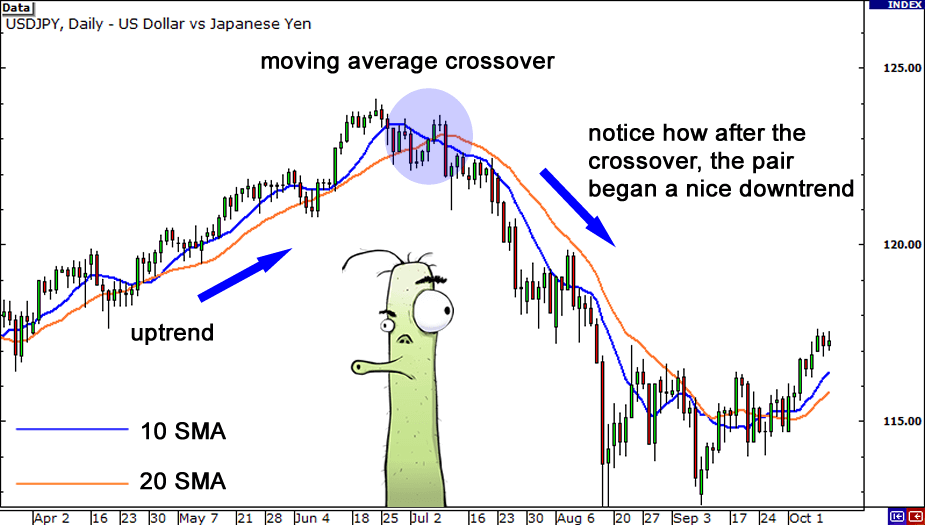
Lowkey, moving average crossovers are the GOAT for spotting trends quick. Super easy peasy. 😎
True, traders got mad options out here for trend-spotting, but moving averages are just easy peasy lemon squeezy.
Step 3: Find indicators that help CONFIRM the trend.
Our second goal, fam, is avoiding those whipsaws like they’re bad vibes, meaning no getting caught in “fake” trends. 😤
The tea is making sure when we spot a trend, we can confirm it and not ghost ourselves with other indicators. 🔍
Some fire technical indicators for trend confirming are MACD, Stochastic, and RSI.

As you level up in this game, you’ll find your fave indicators and slip them into your trading toolkit like a boss. 💼
Step 4: Define Your Risk
Alright, in creating your forex trading system, you gotta lock down how much you’re cool with losing on each trade. Know your limits! 🔒
Real talk, peeps love to talk gains, but a solid trader vibes with potential losses BEFORE thinking of stackin’ up wins. 🤑
How much you’re chill with losing is gonna differ from anyone else, no cap.You gotta decide how much space to give your trade but not risk the farm on just one play. Balance is key, fam. 🎯
More on money management is gonna pop up in another lesson. 🧠 How much to risk is defs a whole mood in the game of money managing.
A trader should always consider potential losses FIRST before dreaming about the big bucks.
Step 5: Define Entries & Exits
Boom, after defining how much you’re cool losing, next thing is figuring your entry and exit timing to stack those gains right. 💸
Entries
Some peeps enter fast when all their indicators are popping, even if the candle isn’t closed. 🤨 Others wait till it shuts.
Some just vibe till the candle closes.Our fam on BabyPips, Pip Surfer, is all about waiting for that candle to lock it down before jumping in. 🕒
Dude's been in countless situations where jumping in too soon made big waves crash the party. Yikes!
It’s all about finding your groove. Some are bolder than others, and you’ll figure out your lane in time. 🛤
For a vibe check, this trader in the chart below entered when the candle dipped below the support line. 👇

Exits
For bouncing out, you got options, my fam. 🎢
One way: keep that stop trailing, like if your money moves in a wave, your stop follows the same groove. 🌊
Another trick? Lock in targets, and peace out when you hit it—calculate your goal however you want. 🎯 Example: peeps use support and resistance for target inspo.
In the chart below, the target exit is around a specific price close to the bottom of the descending channel. 🕹

Some just ride on a set number of pips (fixed risk) across trades. 🚀
However you lock down your exits, stick to the plan like your life depends on it. No bailing early—commit to your system! 🗣
You put the work into creating it, fam! ✍️
Another exit move: set up some criteria that can let you know when it’s time to dip out. 😎
Example: Make it a rule if some indicators reverse it out at a certain vibe, close it up!
Step 6: Write down your system rules and FOLLOW IT!
 This is the grand finale in creating your trading system. You GOTS to write those rules and ALWAYS stick to them. 📜👊
Discipline is non-negotiable for traders, so keep your eyes on that rule book! 👀
No matter how fire your system is, it’ll fizz out if you ghost on the rules, so drench yourself in discipline. 🔥
Oh yeah, did we say STICK TO YOUR RULES?
How to Test Your Forex Trading System
 For the real test run, hop onto a charting software where you can turn back the clock and forward one candle at a time. 🔍
When you slide your chart forward, follow those rule vibes and trade accordingly. 🤓
Stay legit and honest with your record! ✍️
Track those wins and losses, and figure out your average W and L. Happy with the score? Time to level up with a demo account test drive. 🎮
Run your new system on a demo account for at least two months.
This gets you the feels for trading your system in the wild market. Take it from us, live trading hits different than backtesting. 🎡Two months in the demo scene decides if your system can slay the market or not. 🏆
If those results are still G, you can jump into trading live on a real account. 🌟
By now, you should vibe with your forex system like a boss and roll with trades without second-guessing. 🤠